
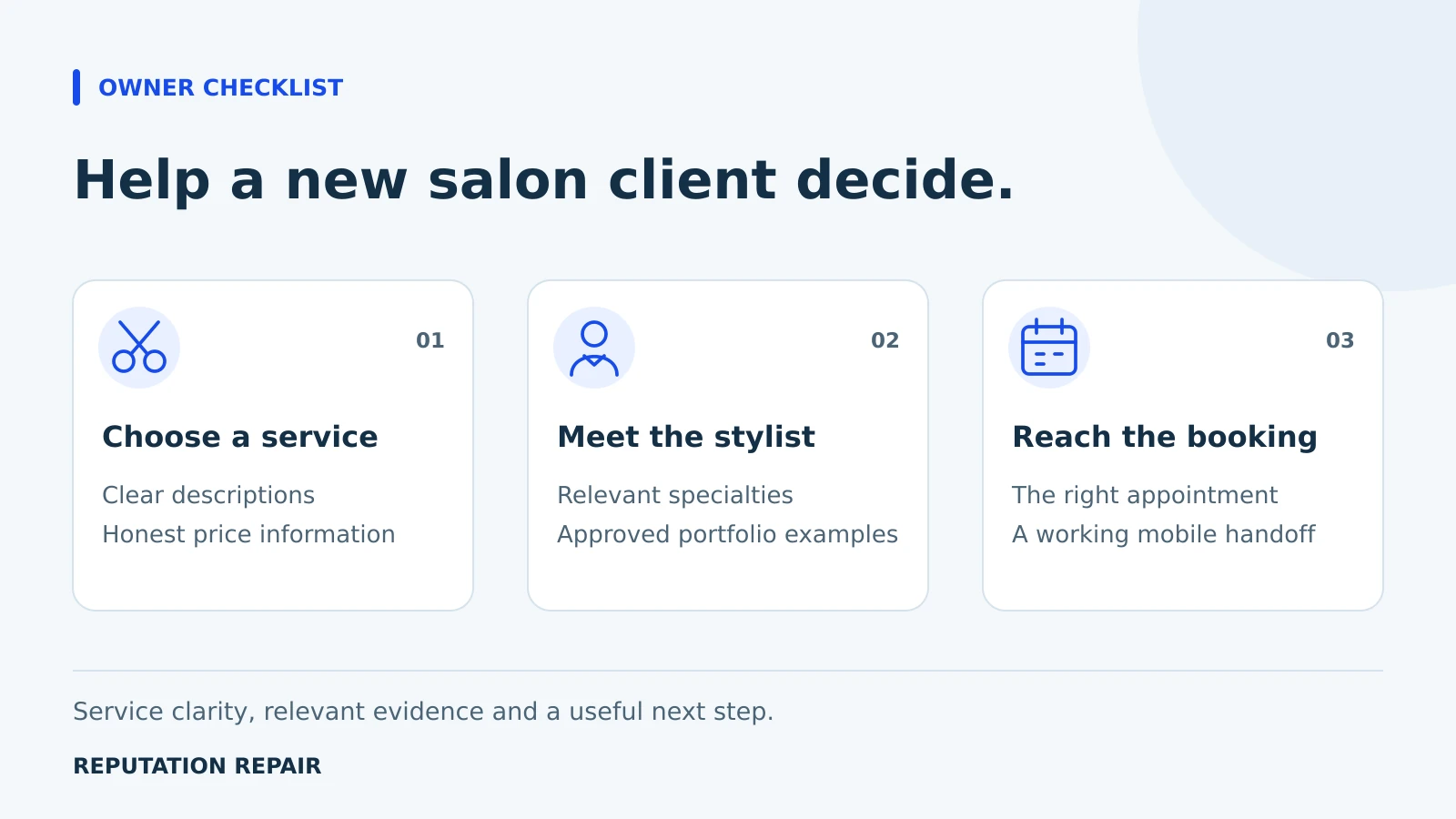
A useful hair salon website helps a new client answer three questions: Do you offer what I need, who should I book with, and what happens next? Review those decisions before adding more promotion. This checklist gives salon owners a practical way to inspect the path from discovery to a confirmed appointment.
Start by checking one realistic task on your phone: choose a service you have never purchased, find an appropriate stylist, and reach an available appointment. Stop before completing a reservation. Write down every point where you have to guess. Those questions are the beginning of your improvement list, even if the website looks polished.
Explain the service before asking someone to book
A returning client may understand your service names. A first visitor may not know whether to choose a consultation, partial color, full color, corrective color or a haircut with styling. Give each important service a short explanation in ordinary language. State who it is intended for, what the appointment includes and whether a consultation is required.
Keep the detail useful rather than exhaustive. If length, technique or the condition of the hair changes the quote, explain how the final price is determined. Label a starting price as a starting price. Describe deposits and cancellation terms where they matter to the booking decision. Do not advertise a fixed total that the salon cannot actually honor.
- Can a first visitor tell which service to choose?
- Are service names consistent between the website and scheduler?
- Are appointment lengths and consultation requirements clear?
- Can someone find the current price or understand how to request a quote?
Help clients choose a stylist with relevant evidence
A team page should do more than display names and portraits. Explain each stylist’s current specialties, the services they accept and the correct way to book. Use accurate training and credential information. If a stylist is not accepting new clients or has moved, update the page and the related booking links.
Use portfolio images you have permission to publish. Connect the examples to the actual stylist and service when you can do so accurately. Avoid implying that every client will get the same result. A smaller set of relevant, properly attributed examples can answer a visitor’s question more clearly than a large gallery with no explanation.
For a salon with independent professionals, make the relationship and booking responsibility easy to understand. A visitor should know whether they are contacting the salon, a specific stylist or a separate business. Confirm how names, payment policies and availability appear before linking to a separate booking account.
Make the booking handoff match the promise
A button labeled Book a consultation should lead to that consultation or to a clearly explained choice. A general homepage for a scheduling provider can make visitors repeat their search. Test the destination while signed out, using the same phone a prospective client might use. Check any browser warnings, required accounts and location selection steps.
If your eligible Business Profile offers appointment links, compare those destinations with the website. Google explains how to add booking links and select a preferred link in its local business links guidance. Available controls vary. Verify what appears publicly instead of assuming an edit has taken effect.
There is usually no reason to replace a scheduling tool that already works for the salon merely to improve the website. First correct the handoff, service labels and instructions. A new provider, automated messaging or a custom integration is a separate decision with its own costs, access requirements and implementation work.
Keep discovery information consistent
Compare the salon’s displayed name, address, suite number, phone, hours and website across its main public profiles. Include useful arrival information such as the correct entrance or parking instructions. If your salon is in a shared suite building, show enough detail for someone visiting for the first time to identify the right business.
Google’s services editor guidance describes adding descriptions and prices for supported service categories. Where those fields are available, keep them aligned with the current menu. This is an information accuracy task. It is not a promise of better placement in local results.
If you discover inconsistencies across several profiles, use the business listings audit checklist to record them before making scattered changes. Keep ownership of the salon’s accounts and share appropriate access with anyone helping.
Use a simple acceptance checklist
Choose one service and one stylist for the first pass. Treat the work as complete only when another person can follow the route without an explanation from you. Keep a short record of the issue, the agreed correction, the person responsible and the date the public change was verified.
- Service selection: the visitor understands what to choose and whether a consultation comes first.
- Stylist selection: the relevant professional, examples and availability are current.
- Price clarity: starting prices, deposits and material terms are understandable.
- Booking: the button reaches the intended service, professional and location.
- Arrival: the address, suite and instructions agree across the main pages.
Measure the decision you are trying to improve
A booking button click is an expression of interest. It is not a confirmed appointment. If you track website clicks, compare them with the scheduler’s actual reservation records before reporting bookings. Keep requests, confirmed appointments, cancellations and attended visits as separate stages. Use aggregate counts and avoid placing personal appointment details in a general marketing report.
Review comparable periods and note other changes, including promotions, staff availability and seasonal demand. A clearer page may be worth keeping even before you have enough traffic to judge a trend. Describe what was fixed and what remains unknown instead of attributing every new appointment to the website.
Reputation Repair’s beauty and wellness visibility page explains how we approach the public information and booking journey. If the website itself needs work, our business website services can be scoped around the specific gaps. Begin with the decisions a new client needs to make, then agree on the work and price.