
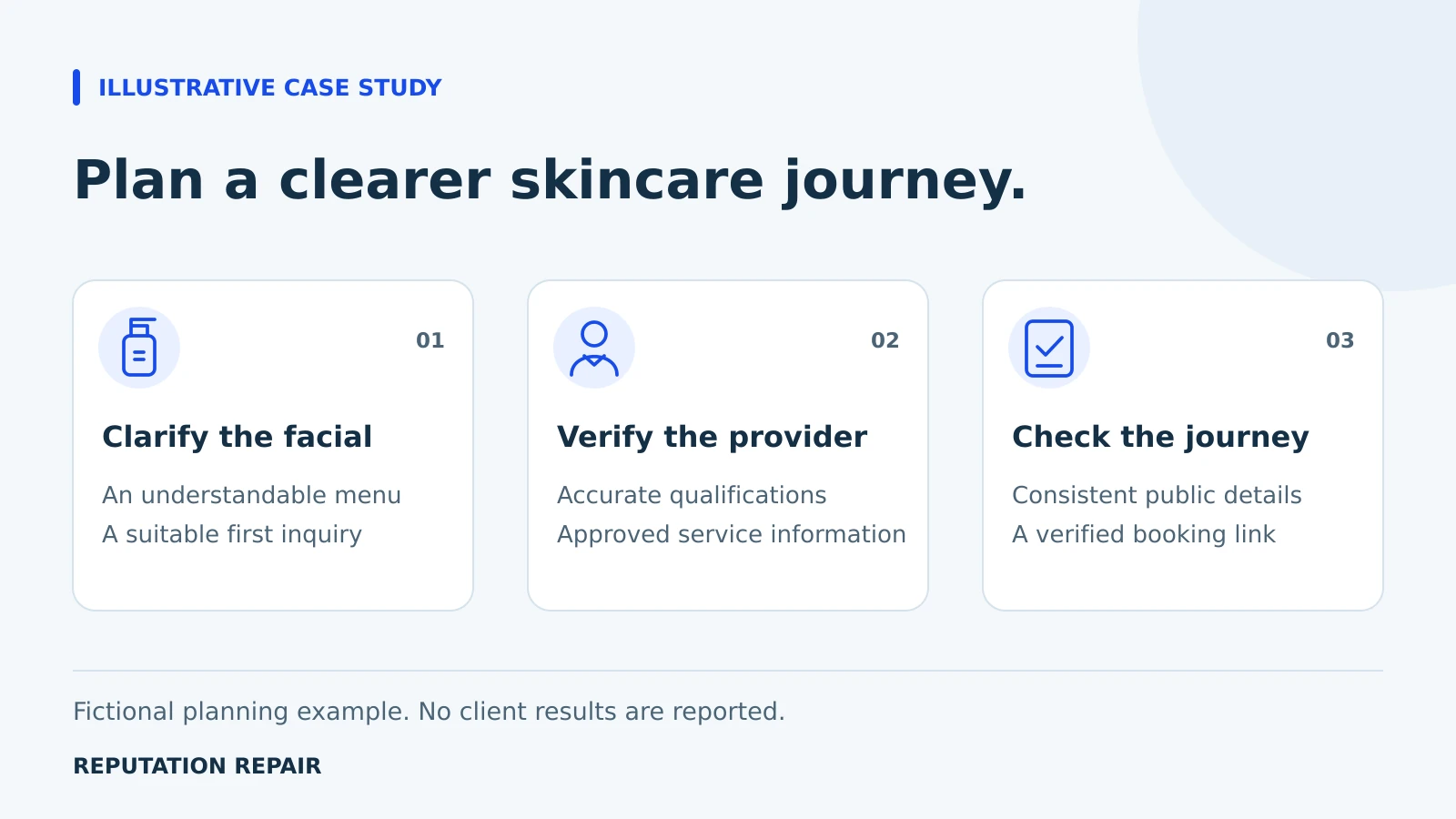
Illustrative case study: a fictional skincare studio has a referral base, but its public pages leave first visitors unsure which facial to choose. This example shows how a visibility review could become a practical improvement plan. It describes proposed work and measurement criteria, not a completed RR engagement or reported client results.
The useful question in this example is what a new visitor needs to understand before contacting a skincare provider. The proposed response is a clearer service and booking journey, followed by honest measurement. The studio, its circumstances and the planning sequence below are fictional. No appointments, revenue gains or search improvements are claimed.
The illustrative situation
Imagine an independent studio offering facials and related skincare services. Existing clients know the provider and recommend the business. Someone arriving without that introduction sees appealing photographs but several unfamiliar service names. The website does not explain which option is intended for a first visit, and the provider biography is difficult to find.
In this fictional setup, the booking link opens a large service menu without carrying over the visitor’s choice. The website and one public listing also show different appointment hours. These are assumptions created for the example. An actual engagement would start by checking the public evidence and confirming the owner’s approved information.
Define the business question before choosing a tactic
The starting question would be: can an interested new visitor understand the service, identify the provider and reach the correct next step? That question gives the owner something concrete to inspect. It avoids treating more reviews, publicity or a larger content calendar as the automatic answer to every growth concern.
The owner would first confirm available capacity, the services they want to offer and how they handle a first consultation. If the business has no suitable appointment capacity, additional promotion may be the wrong immediate priority. If the first visit service itself is unclear, that decision belongs with the provider before a writer creates new copy.
Priority one: make the service choice understandable
The proposed work would begin with a short explanation for each main facial. Describe the intended appointment experience, approximate duration, what is included and how pricing is determined. State when a consultation comes first. Use language the provider has reviewed for accuracy and avoid making a visitor diagnose a concern from a marketing menu.
The acceptance check would be simple: someone unfamiliar with the studio can identify the first visit option or find the correct way to ask. The website and scheduler would use consistent names. Any starting price, deposit or material cancellation term would be labeled clearly. These checks define the deliverable; they do not predict a conversion increase.
Priority two: support confidence in the provider
A visible provider page would explain the practitioner’s role, relevant qualifications and services within their actual scope. The owner would verify every credential. Approved images could show the real setting and identify the person a visitor would meet. No invented awards, stock client testimonials or implied endorsements would be added.
Portfolio examples, if appropriate and authorized, would need accurate context and permission for publication. They should not be presented as a promise of identical outcomes. The proposed page would keep health questions in the provider’s appropriate private process and avoid collecting treatment histories in a general marketing inquiry form.
Priority three: align discovery with the next step
The review would compare the approved business name, address, suite, contact information, appointment hours and website destinations. Each discrepancy would have a named owner and a verification step. Google’s services guidance explains the description and price fields available to supported categories. Available fields would be used only for accurate, current information.
The booking test would begin on a phone while signed out of the studio’s accounts. It would follow the first visit service into the existing scheduler and check that the destination matches the promise. Replacing the scheduler would require a separate decision. The initial plan would focus on fixing the information and handoff using the systems the studio already supports.
An illustrative sequence for the work
- Before changes: capture the visible gaps, confirm approved facts and record the available baseline.
- First pass: clarify the first visit service, provider information and relevant terms.
- Second pass: align public information and test the complete mobile booking route.
- Verification: have the owner confirm the published facts and another person repeat the first visit task.
- Review: compare actual inquiry and appointment records over comparable periods before deciding what to expand.
This sequence is a planning example rather than a promised completion timetable. Access problems, owner approvals or a third party’s update process could change the work. The scope would identify which changes RR would make, which the studio would own and which require another provider.
Define measurement without inventing a success story
The first report would distinguish completed work from business outcomes. It could record that a service description was approved, a public discrepancy was corrected or a booking link passed inspection. Those are verified changes. Claims about new customers, revenue or improved visibility would require separate evidence.
For outcomes, the owner could review qualified inquiries, confirmed first appointments and attended visits. A qualified inquiry would mean a genuine request for a service the studio offers, using a definition agreed before counting. The scheduling records would establish confirmed appointments. Duplicate requests, cancellations and rescheduled visits would need consistent handling.
Google’s performance documentation distinguishes profile interactions and available booking reporting. A website click is not proof of a reservation. Reports would keep those stages separate, note missing attribution and account for other changes such as promotions or appointment capacity.
What this example suggests for an actual studio
A visibility plan becomes useful when it connects a specific uncertainty to a verifiable correction. In this example, the priorities are service clarity, provider confidence and a usable booking path. The fictional studio has no reported outcome. A real case study should be written later from documented work and approved results.
Reputation Repair’s beauty and wellness page describes the relevant review and scoping approach. If your public information or site needs work, our business website services can support an agreed set of improvements. Start with the journey your prospective client can actually see, then decide what deserves investment.