A practical guide for responding to negative Google reviews with clear ownership, careful public wording, private resolution and accurate reporting.
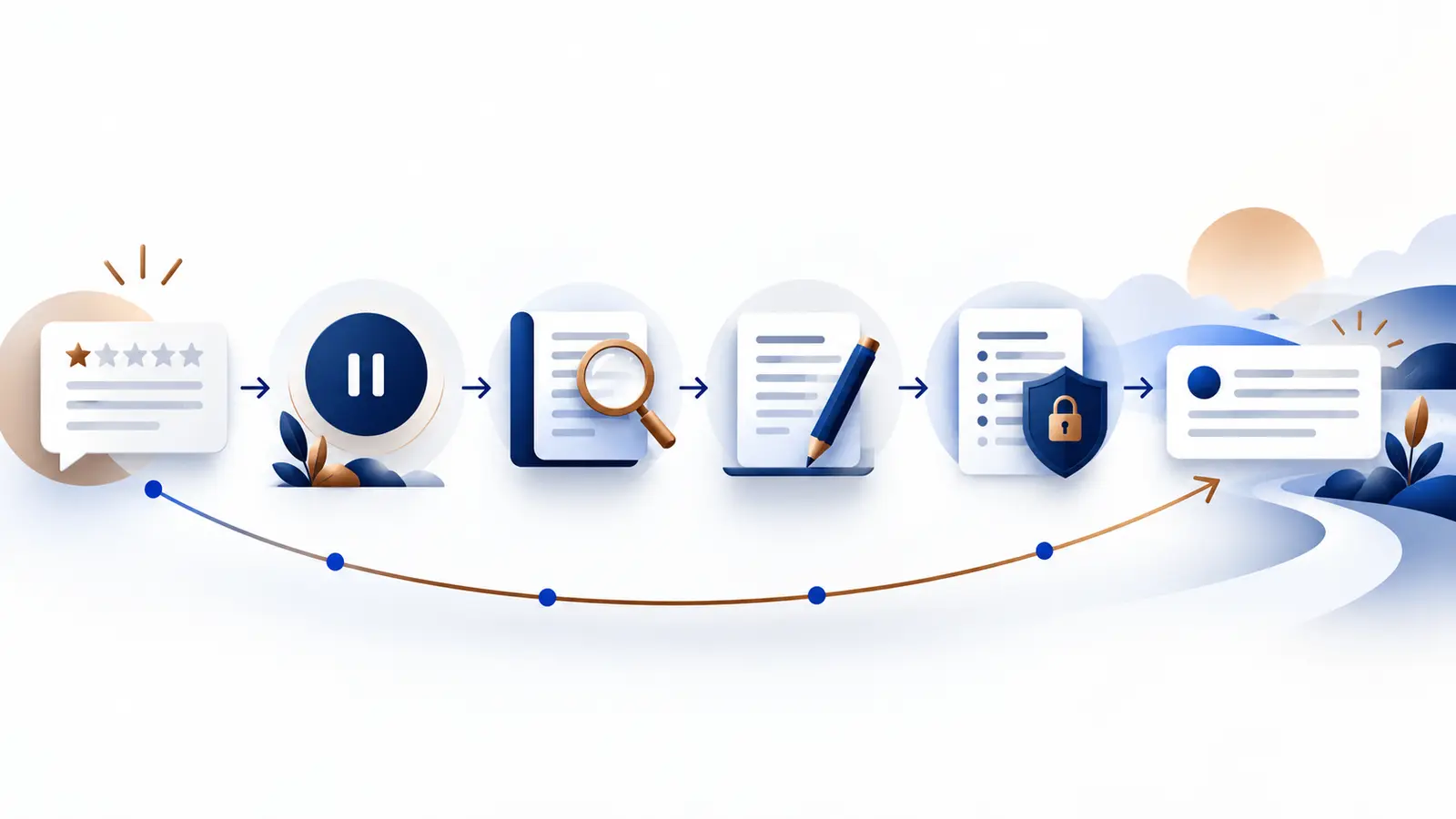
To respond to a negative Google review without making the situation worse, acknowledge the concern, avoid debating details in public, offer a clear private contact route and document the issue internally. The response should help future readers see that the business is attentive and organized. It should not try to win an argument with the reviewer.
Google states that replies from a verified Business Profile are posted publicly after review and that the reviewer is notified. The reviewer can also change the review after reading the reply. That means every response should be written for two audiences: the person who posted and the prospective customer who may read the exchange later. See Google Business Profile Help on managing customer reviews.
Check the facts before you reply
A fast response is useful only when the right person has enough information to choose the right action. Save the review text, rating, profile name, date and public link. Then check the relevant business record without copying private customer details into a general response document.
- Confirm which location, service or team the review appears to concern.
- Identify whether the reviewer can be matched to an ordinary business interaction without stating that match publicly.
- Separate an opinion from a factual error and from content that may violate platform policy.
- Assign one response owner and one escalation contact.
- Record the response deadline, approval decision and any private resolution step.
If the review mentions a legal dispute, a safety concern, medical information, employee conduct, threats or personal information, pause the routine response process. Send it to the designated owner for an appropriate review. A public reply is not the place to disclose a customer record or prove that the reviewer is wrong.
Use four parts in the public response
A useful response can often be short. It should recognize the concern without admitting an unverified claim, state the business standard in plain language, move specific details to a private channel and give the reader a real next step.
- Acknowledge the concern. Thank the reviewer for sharing feedback or say that the business is sorry to hear about the experience.
- State the appropriate standard. Describe what the business normally tries to provide without claiming that the reviewer received it.
- Protect the details. Do not publish account history, purchase details, appointment information or an employee investigation.
- Offer a private route. Name the role, phone number, email address or contact page that can review the matter.
Avoid canned promises such as saying that every complaint will be fixed immediately. If the business has not reviewed the matter, say what it can honestly do next. A measured response builds more confidence than a broad promise that the team may not be able to keep.
Decide whether to respond, report or escalate
Not every negative review calls for the same action. A critical but relevant customer opinion usually belongs in the response workflow. Content that appears to violate Google policy may also be reported through the platform process. Reporting a review does not guarantee removal, and a disagreement with the rating is not itself proof of a violation.
- Respond: The review describes a recognizable service concern in respectful language.
- Respond and resolve privately: The issue needs account level facts, a refund decision, scheduling details or manager review.
- Report and document: The content appears to include prohibited personal information, harassment, threats, impersonation or another policy issue.
- Escalate before replying: The review involves a regulated matter, active legal dispute, safety issue or confidential information.
Google's prohibited and restricted content policy identifies categories such as harassment, threats and certain personal information. Compare the actual review with the current policy and document the reason for any report. Do not describe a reviewer as fake simply because the business cannot immediately identify the person.
Adapt the wording to the situation
The following examples are illustrative. They are not responses to actual clients or customers, and they should be reviewed against the facts and the business's approval rules.
For a general service complaint: Thank you for sharing this feedback. We aim to provide clear communication and reliable service, and we would like to understand what happened. Please contact our customer care manager at [contact route] so the team can review the details with you privately.
For a billing concern: We understand that billing questions can be frustrating. We cannot review account details in a public forum, but our billing lead can examine the record and explain the available next step. Please contact [contact route] and reference this review.
For an unrecognized review: We take feedback seriously, but we do not have enough information here to identify the interaction. Please contact [contact route] with the date, location and service involved so the appropriate manager can review it. Avoid adding that the person was never a customer unless the designated reviewer can support that statement and approves saying it publicly.
Respond once, then move the work private
A review thread should not become a public negotiation. After posting a clear response, use the offered private route to investigate and communicate. If the reviewer edits the review or adds a material new claim, reassess the response rather than posting repeated defensive messages. Google allows a business to edit or delete its reply, so correct inaccurate wording when necessary and retain an internal record of the change.
Create an approval workflow before the next review
The best time to decide how reviews are handled is before the next difficult one appears. A small business can use a simple matrix that separates routine feedback from sensitive matters.
- Front line owner: monitors new reviews and prepares routine drafts.
- Location manager: verifies operational facts and approves ordinary service responses.
- Sensitive reviewer: handles legal, medical, privacy, safety and employee concerns.
- Response standard: defines tone, private contact routes and details that must never appear publicly.
- Tracking record: shows when the review arrived, who approved the action, whether a response was posted and what remains unresolved.
For healthcare reviews, use a more restrictive confidentiality process. Our guide to responding to patient reviews without disclosing private information covers that separate intent. Law firms facing disputed reviews can use the law firm evidence and escalation checklist.
Measure the work without overstating the result
A useful review report separates completed activity from business outcomes. Track new reviews, response coverage, average response time, reported policy concerns, unresolved escalations and listing corrections. Do not treat a posted reply as proof that the customer is satisfied, that the rating will change or that revenue increased.
Reputation Repair's managed reviews and listings service can define monitoring, routine responses, feedback requests, escalation contacts and reporting for the locations in an agreed proposal. The business retains responsibility for accurate information and sensitive approvals. No positive rating or removal decision is guaranteed.
Common questions
Should a business reply to every negative Google review?
Use a consistent review process, but not every review needs the same response. Routine service feedback can usually receive a short public reply. Reviews involving confidential information, legal issues, threats or safety concerns should go through the designated escalation process first.
Can replying cause a reviewer to change the review?
Google notifies the reviewer when a business replies, and the reviewer can edit the review afterward. A reply does not guarantee that the rating or wording will change, so the response should remain useful and accurate even if the review stays the same.
When should a negative review be reported to Google?
Report content when there is a documented reason to believe it violates current Google policy, such as certain harassment, threats or prohibited personal information. A negative opinion or disagreement with the business is not automatically a policy violation, and reporting does not guarantee removal.