
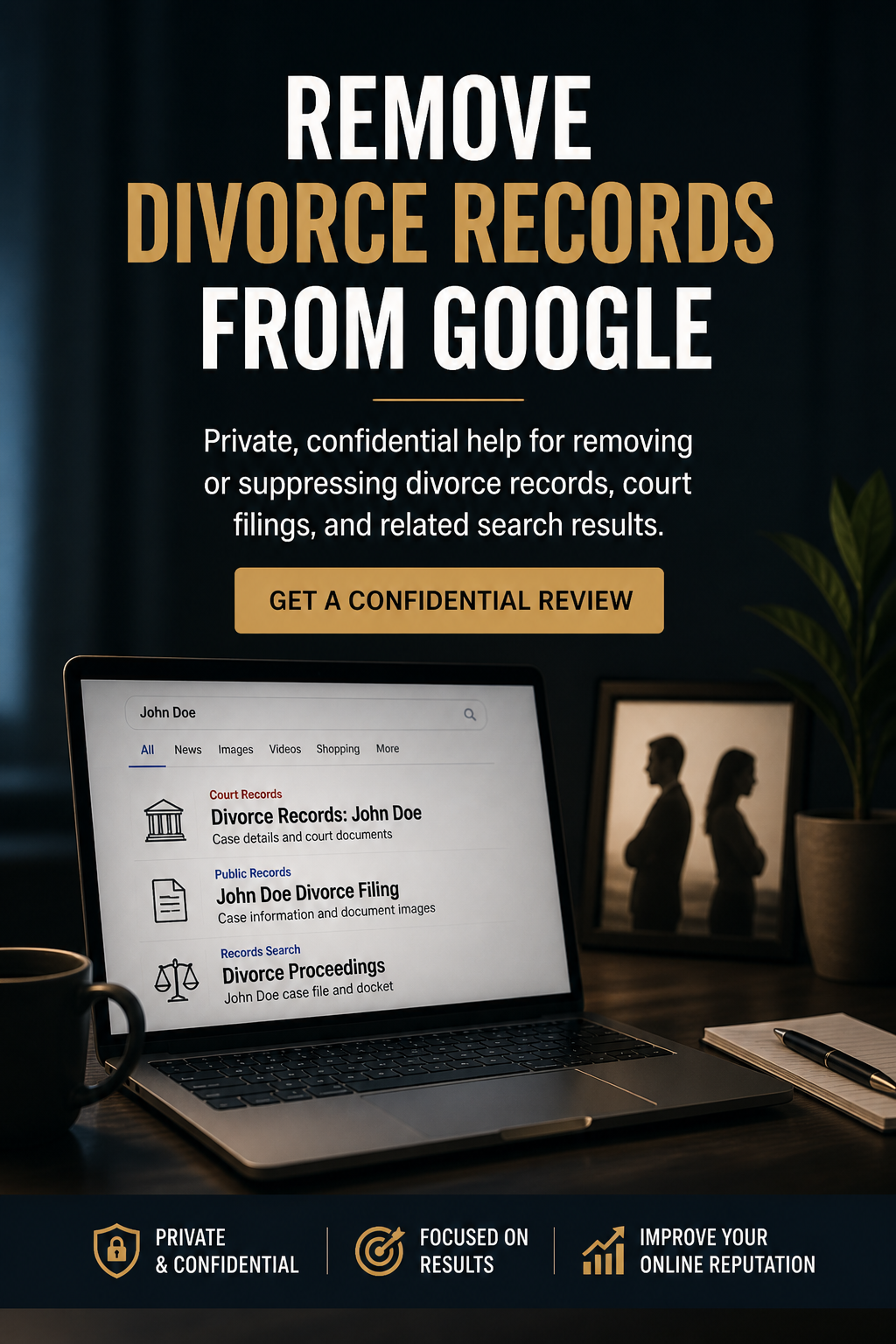
Remove Divorce Records from Google
Private, confidential help for removing or suppressing divorce records, court filings, and related search results.
If Divorce Records Show Up, They Change How You’re Viewed
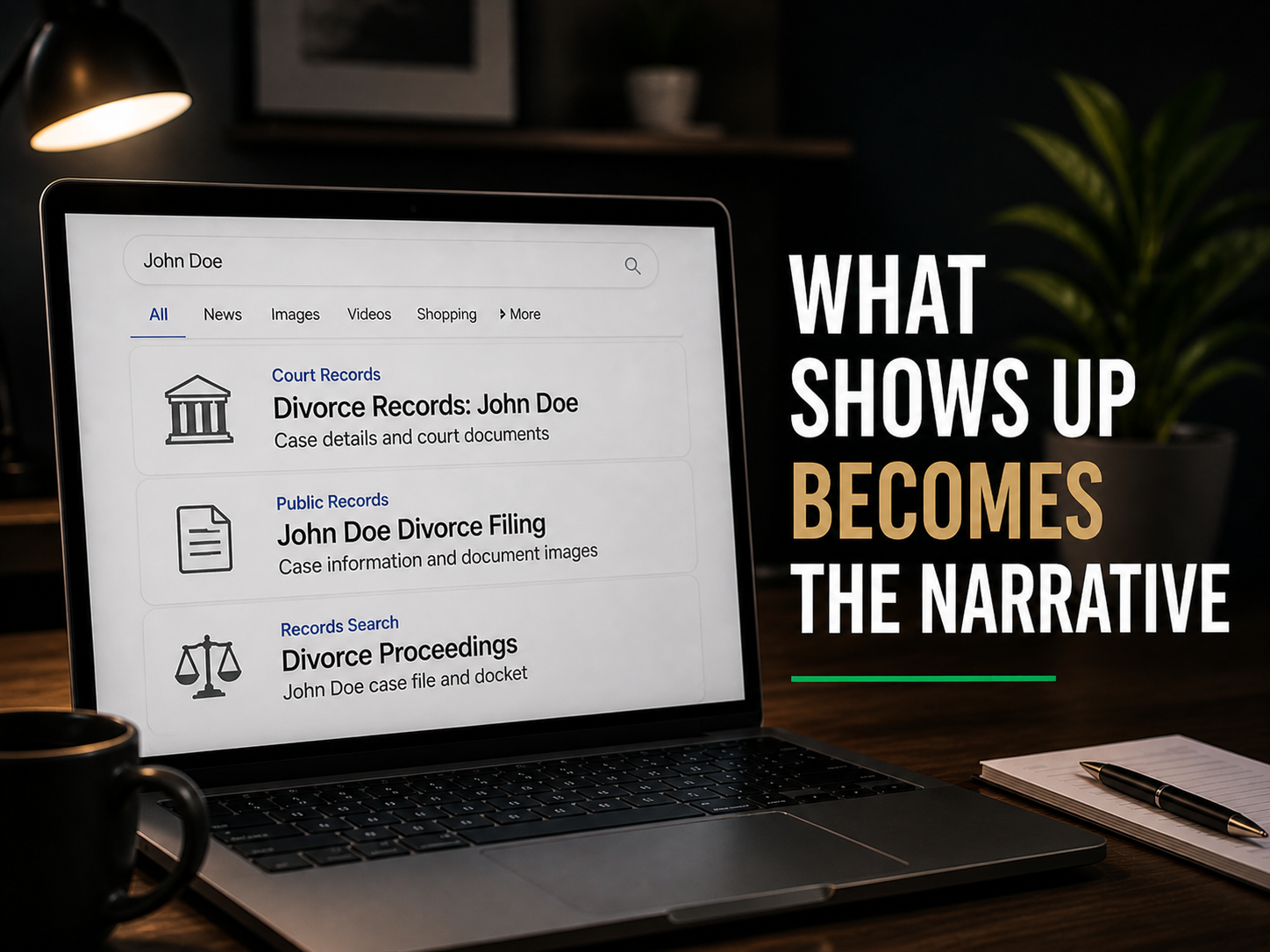
When someone searches your name and sees divorce records or related filings, they are not reading for context.
They are forming an impression.
That impression happens in seconds and can influence how you are viewed professionally and personally. Clients, employers, and partners may all interpret personal information differently when it appears without context.
Most people will not ask questions.
They will simply move on.
What Can Be Removed and What Can Be Controlled
Every situation is different. Some divorce records and filings can be removed or limited. Others are part of public record and cannot be taken down.
We evaluate:
whether the content is eligible for removal
where it is being published and indexed
whether it is being repeated across multiple sites
how visible it is in search results
If removal is possible, we pursue it.
If it is not, we focus on reducing visibility.
How We Reduce Visibility and Shift What Shows Up
Page one of Google receives the vast majority of attention. Once a result moves off page one, it loses most of its impact.
We build a stronger, more relevant set of signals around your name:
professional profiles
controlled content
third-party validation
consistent, current positioning
Search engines prioritize clarity and relevance. When stronger signals exist, older or less relevant records become less visible.
You are not erasing history.
You are making sure it does not define your present.
How Long It Takes
Search results do not change overnight.
Most clients begin to see movement within 30 to 60 days.
More meaningful shifts typically happen between 60 and 120 days, depending on:
how many articles are ranking
the authority of the publications
how widely the content has been distributed
how long it has been visible
Older, widely referenced articles take longer to shift.
Direct, Confidential, and Outcome-Focused
These situations are personal.
Everything is handled privately and with discretion.
You will work directly with someone who understands how search results are formed and how to shift what is being shown.
Each case is evaluated individually based on what is visible and what can realistically be improved.

See What Is Actually Showing Up
If divorce records or personal information are visible when someone searches your name, they may already be influencing how you are viewed.
The first step is understanding what is there and what can be done.
“Personal information from a divorce that happened years ago was still showing up when people searched my name. Reputation Repair helped push those results down and replace them with content that reflects where I am today. It made a real difference in how I’m perceived.”
— Anonymous ClientFrequently Asked Questions
-
In some cases, yes. It depends on the source and whether the content qualifies for removal. If not, we focus on reducing visibility.
-
Public records are often difficult to remove, but they can still be managed by building stronger, more relevant search results around your name.
-
Once results move off page one, they lose most of their visibility. Most people never go beyond the first page of search results.
-
Most clients see early movement within 30 to 60 days, with more significant changes over 60 to 120 days.
-
No. Everything is handled privately and strategically. The goal is to reduce visibility of sensitive information, not increase it. We do not create unnecessary exposure or draw attention to existing content.
-
Yes. All work is handled privately and discreetly.